Event Data Recorder (EDR) Use in Reconstructing Motorcycle Collisions
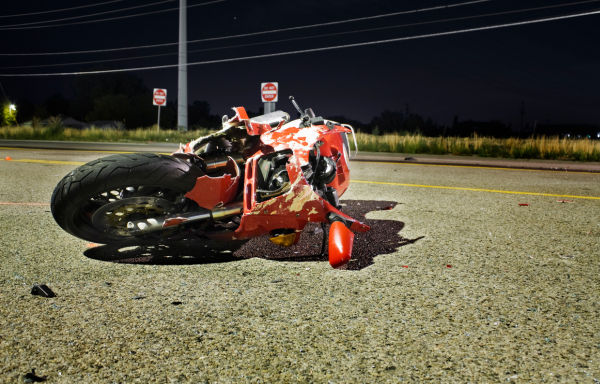
Event Data Recorders (EDRs), commonly known as “black boxes,” have been installed in passenger vehicles since the mid-1990s, first implemented by General Motors. Their presence became widespread after 2013, when federal regulations (49 CFR Part 563) mandated standards for the collection, storage, and retrieval of crash data. Currently, no similar federal requirement exists for motorcycles.
Honda was the first to introduce EDRs in motorcycles with the 2006 Gold Wing, particularly in airbag-equipped models. Kawasaki followed in 2013, gradually equipping most Ninja, Versys, and Z-series models by 2018-2019. Harley-Davidson’s 2014 “Boom! Box” infotainment system could log GPS data at 1 Hertz on the Premium version, though the feature was disabled by default. It required the rider to manually activate it, which was an option rarely used in practice. To determine if a specific motorcycle is equipped with an EDR, the owner’s manual is the best reference.
Even when a motorcycle lacks an EDR, or, if the EDR failed to record crash data, valuable information can often be obtained from the other vehicle involved. Passenger vehicle EDRs capture change in velocity (Delta-V) during a collision, which can help estimate the motorcycle’s impact speed, when combined with momentum principles. Due to the significant weight differences between motorcycles and passenger vehicles, careful engineering judgment is essential in interpreting these calculations.
While motorcycle EDRs are not yet widespread, understanding their capabilities, and leveraging EDR data from other vehicles, can provide critical insights in reconstructing collisions. Accurate interpretation of EDR and crash data is essential for reconstructing collision dynamics, determining impact speeds, and clarifying the sequence of events.
Robert T. Lynch, P.E.
Principal Collision Reconstruction Engineer
View all articles by Robert T. Lynch, P.E.