Conspicuity of Construction Equipment at Night

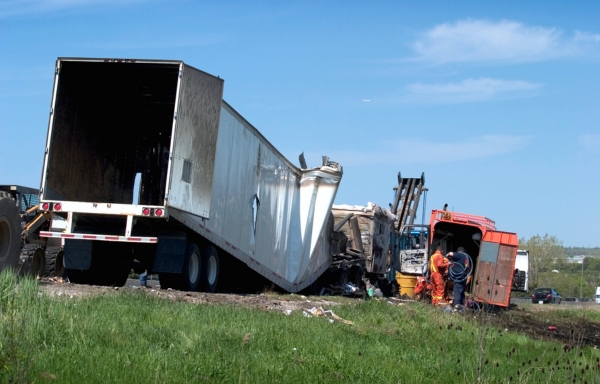
A collision occurred at night between a passenger vehicle and construction equipment perpendicular to the roadway. Although the machine had front and rear lights, it had no side lights or reflectors. The approaching vehicle operator failed to see the machine in time, and a collision occurred. At the time of the incident, there were no advance warning signs or cones to alert the vehicle operator of the machine in the roadway.
From a reconstruction standpoint, the machine entered the roadway and blocked the travel lane, creating a hazard for the approaching vehicle operator and thus was the precipitating factor in the collision. DJS Associates, Inc. was asked to evaluate the circumstances of the collision and opine on the visibility/conspicuity of the construction equipment to determine whether the average driver, traveling at or below the posted speed limit, could have identified the machine from far enough away to perceive, react, and avoid the collision.
The speed limit was 25 miles per hour. A vehicle operator traveling at that speed needs approximately 100 feet to perceive, react, and avoid the collision. Based on nighttime recognition distance research, it was determined that the average driver would detect the machine from a distance of greater than 150 feet away, thus rendering the incident avoidable for the prudent and attentive vehicle operator.
So, while the machine operator created the hazard that led to the incident, it was determined that the speed and/or inattention of the vehicle operator contributed to the collision. While cones, warning signs, or a flagger would have provided the vehicle operator with advance notice of the machine and a better opportunity for the driver to avoid it, the existing conditions were sufficient for the vehicle operator to avoid the collision without these additional safeguards in place, had he been attentive while traveling at or below the speed limit.
Robert T. Lynch, P.E.
Principal Collision Reconstruction Engineer
View all articles by Robert T. Lynch, P.E.