Sound Level Measurements & Binaural Recordings in Accident Reconstruction
A binaural recording can make the circumstances of an accident startlingly clear. In one case, a man standing at a loading dock was struck and killed by a reversing truck without a backup beeper. In the recording, there is no audio aside from miscellaneous activity on the lot as the truck approaches, until the sudden impact. The effect is both chilling and illuminating.
In legal cases, accident reconstruction is often essential for understanding what occurred and supporting the arguments of the parties involved. Evidence can be contributed to many such cases using two primary techniques: sound level measurements and binaural recordings. Sound and hearing are fundamental to how we perceive the world. In some incidents, sound can be crucial to determining responsibility.
When reconstructing an event, it is important to gather two complementary types of sound information:
- Sound levels
- Recordings
Sound Level Measurements
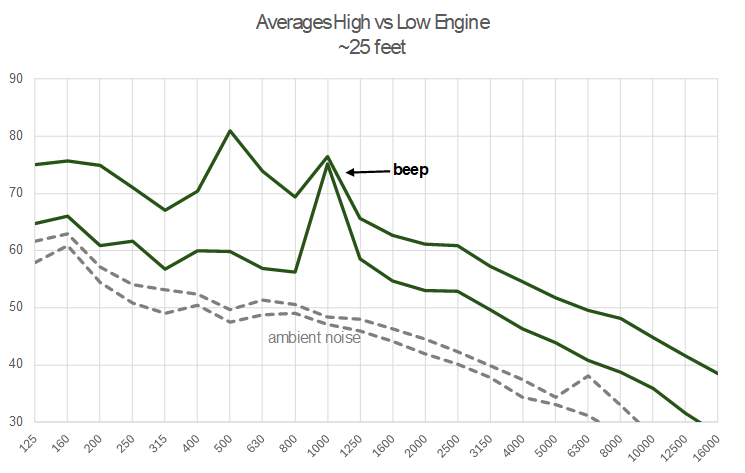
Sound level measurements provide objective, quantifiable data such as levels and spectral content. For example, in another case, measurements demonstrated that a truck’s backup beeper was significantly louder than the ambient noise and therefore should have been audible to the victim.
The sound level graph below clearly shows the beeper’s spectrum rising above the truck noise within a frequency range to which human hearing is especially sensitive.
Binaural Recordings
We can complement this objective information with sound recordings using binaural microphones. The results are astonishingly realistic. This realism can be invaluable. Experts cannot be sure what a person saw in a particular situation, but jurors and attorneys can experience, as closely as possible, what the victim might have heard at the time of the incident.
Coordination
Using both sound level measurements and binaural recordings creates a fuller picture, complementing the visual information that computer reconstructions provide so well.
Conclusion
Experts have many tools to reconstruct accidents. One of the most important aspects is the subjective experience of the people involved. Measuring sound levels illustrates what physically happened; binaural recordings capture what the victim likely heard at the catastrophic moment.