Escalating the Damages
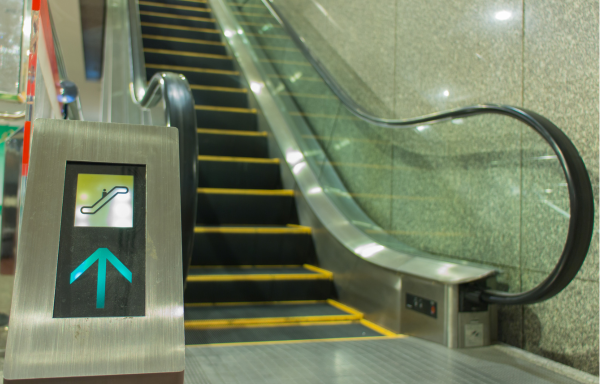
When an escalator at American Family Field malfunctioned in June 2024 following a Milwaukee Brewers game, eleven fans were injured, five of whom required hospitalization. Such high-profile accidents represent only a fraction of vertical transportation hazards across the country. According to the Western Journal of Emergency Medicine, over 10,000 escalator-related injuries require emergency room treatment in the United States every year, with public assembly venues accounting for a disproportionately high share of severe crowd-related claims. Incidents like this grab headlines, but as anyone who has managed a public assembly facility can attest, escalator injuries happen far more frequently than the general public realizes. When these events turn into personal injury litigation, key legal questions hinge on proving whether industry standards were met, documentation was pristine, and crowd management was properly implemented.
While actual mechanical breakdowns occur, expert analysis reveals that the vast majority of escalator claims do not stem from structural equipment failure. Instead, they are driven by human behavior, patron impairment, overcrowding, and the dangerous (yet common) practice of patrons using stopped escalators as static stairs. In high-density stadium and arena environments, preventing these incidents requires moving beyond basic code compliance to enforce rigorous operational, maintenance, and administrative controls.
To establish accountability in court, legal counsel and facility operators must understand the precise frameworks and safety codes that define the industry standard of care. Legal disputes inevitably center on compliance with model codes like ASME A17.1/CSA B44 (Safety Code for Elevators and Escalators), local building and elevator inspection statutes, and accessibility requirements under the Americans with Disabilities Act (ADA). These standards govern everything from step-to-skirt clearance thresholds to comb-plate impact switches. In premises liability litigation, claims cannot rest on vague assertions of diligence or fault; counsel and experts must evaluate line-item alignment with these governing codes and applicable municipal operating permits.
Based on where vertical transportation risk management frequently breaks down, here is what facility leaders must monitor and what expert witnesses look for when evaluating the standard of care:
Enforce, train, and audit post orders for crowd monitors.
Stationing staff to the top or bottom of an escalator proves worthless if staff abandon their posts or fail to act during obvious overcrowding. Post orders must explicitly define monitor duties: regulating pedestrian density; redirecting vulnerable or impaired patrons to elevators; actively intervening to correct horseplay or reckless behavior; preventing patrons from walking on stopped units; and actuating emergency stop buttons immediately during a fall or entrapment. Managers must actively train, supervise, and evaluate staff on event days to ensure compliance.
Treat maintenance logs, repair records, and service contracts as critical evidence.
Facilities must maintain a current Certificate of Operation, displayed per local code. Beyond municipal requirements, operators should execute detailed maintenance contracts with licensed providers incorporating specific response-times, routine servicing, and mandatory monthly preventative maintenance check-sheets. Meticulous service records serve as primary evidence in litigation. Missing log entries, unaddressed work orders, or perfunctory checkmarks indicate negligent maintenance.
Leverage venue-specific operational expertise.
Operators demonstrate true standard-of-care mastery by addressing operational nuances: establishing pre-clearing protocols before reversing escalator direction, routinely auditing comb-and-step mesh points for footwear entrapment hazards, ensuring skirt deflector brushes are installed, and verifying that emergency stop signage is unobscured.
Execute a strict post-incident shutdown, documentation, and dual-clearance protocol.
Immediately following any incident, remove the unit from public service. Staff must generate a standardized incident report recording the precise dates, times, party identities, photos, and objective facts. Keep the escalator shut down until comprehensive, independent inspections are completed by both the venue’s licensed service contractor and the local governmental code authority. Until clearances are formally granted by both entities, the unit must remain completely offline.
Position CCTV coverage to eliminate factual ambiguity.
High-definition video coverage is vital for establishing the facts. Position cameras to capture the entire escalator length and landing zones. Clear footage objectively reveals whether an injury resulted from patron error, pre-existing impairment, or horseplay, versus mechanical malfunction or improper operation.
Execute physical pre-startup walk-throughs.
Escalators must never be energized remotely or restarted without a physical walk-through inspection. Severe crowd-crushing injuries occur when barricades are left at a landing zone when a unit is turned on. A designated safety officer must physically clear the entire run and landing area before public entry.
The common thread across vertical transportation safety is simple: unambiguous staff directives, active staff supervision, standardized incident reporting, and audit-ready maintenance documentation protect public safety while providing a clear factual roadmap for litigators long before a claim reaches a courtroom. Ultimately, as demonstrated by the fallout from the American Family Field incident, mechanical failures and crowd rushes carry immense operational, reputational, and legal consequences. Establishing a rigorous, layered protocol is the best foundation for patron safety and objective liability assessment.