Mower Repair Results in Injury…and $11 Million Lawsuit
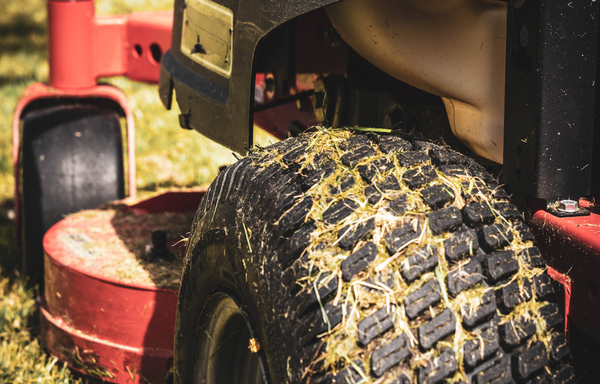
Case Summary: A mechanic was called to repair a large side-wing mower on a tractor in the field. The operator reported that the mower was stuck in the stowed (or travel) position due to the hydraulic cylinder separating from the mower deck frame. The mechanic traveled to the sit to repair the damaged cylinder by replacing the rod end. Prior to starting his work on the mower, he confirmed that the mower deck was fully supported on the travel lock.
To complete the repair after replacing the rod end, the hydraulic cylinder end needed to be reconnected to the mower deck frame by inserting a connecting pin. However, the rod end was not aligned with the frame hole. The mechanic asked the operator to enter the cab and extend the cylinder using the wing mower’s hydraulic controls to align the holes. The operator obliged, started the engine, and tried to extend the cylinder, which initially did not work. On the next attempt, the mower deck that weighed several hundred pounds moved off the travel lock and fell onto the mechanic’s arm, shoulder, and chest, resulting in significant injuries.
Expert Analysis: Inspection of the tractor and side-wing mower revealed that the mower had two hydraulic cylinders used to deploy and stow the mower deck. One was the lift cylinder, used to raise and lower the mower’s frame, and the second was used to tilt or rotate the mower deck from the stowed position to the extended position, where it would be used to cut grass. In order to deploy the mower deck from the stowed position, the operator would use the lift cylinder to raise the mower deck off the travel lock pin and, once clear of the lock, the tilt cylinder would be used to extend the deck to the cutting position. Once rotated down, the lift cylinder would be used to lower the deck for cutting.
Controls for the two hydraulic cylinders consisted of two unmarked levers that were in the tractor cab. A label indicating the function of the controls was on the windshield. Since the lift cylinder for the mower deck was not connected and the mower deck was supported by the travel lock, the mechanic believed there was no way to lift the mower deck off the travel lock without additional equipment. Therefore, he felt it was safe to work under the mower frame supported by the travel lock. At the first inspection, it was requested that the operator actuate the lever to extend or rotate the mower deck while it was still on the travel lock. When this was done, the mower deck initially engaged the travel lock, then jumped off the travel lock pin and dropped down.
Notably, the manufacturer’s service manual did not include a procedure or instruction for replacing the hydraulic lift cylinder. Other instructions indicated that the mower deck should be securely supported on the travel lock before working near the mower deck. None of the materials indicated that the mower deck could be disengaged from the travel lock using the tilt cylinder, and there were no warnings on the tractor or mower to indicate this could occur.
The travel lock consisted of a vertical pin and a hoop that would lower onto the pin when the mower deck was stowed. Analysis of the design showed when the tilt cylinder was actuated with the mower deck in the stowed position, the hoop would contact the pin. If the operator continued to actuate the tilt lever, the force would cause the mower deck to shift upward and the hoop would jump off the travel lock pin, allowing the mower deck to drop.
Several design changes could have been implemented to eliminate this hazard. For example, the design could have included a system to disable the tilt actuator when the mower deck was in the stowed position. Other mower manufacturers have incorporated a manual latch to lock the mower in place until it is manually unlocked by an intentional action. Another proposed alternative was to replace the vertical pin used on the travel lock with an inverted “L” or hook-shaped post that would prevent the hoop from sliding up and off the top of the travel lock. During the deposition and discovery process, it was determined that the manufacturer had considered such a design during the initial design process but opted for the straight post instead.
While incorporating a travel lock that securely stowed the mower deck in place, eliminating the hazard that led to the plaintiff’s injuries, would have been the preferred method to protect users, it was not the only option available. The manufacturer also could have required the mower deck to be secured in place using additional means to prevent it from moving during maintenance and repair. Furthermore, they could have included instructions for replacing or repairing the lift cylinder in their service manual, providing steps to secure the mower deck so it could not drop down.
Result: The case went to trial, and the jury returned a verdict for Plaintiff and his wife, awarding $11 million in damages.
John R. Yannaccone, P.E.
Principal Mechanical Engineer
View all articles by John R. Yannaccone, P.E.