Investigating a UTV Rollover
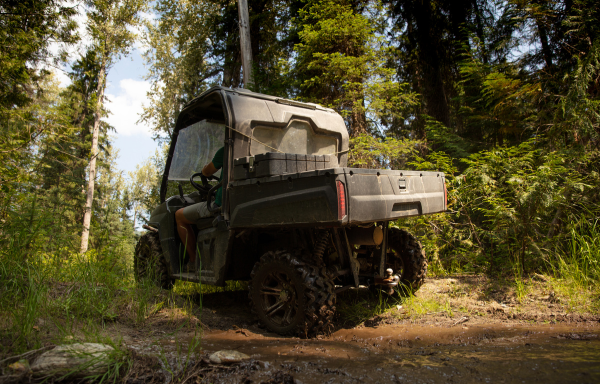
Case Summary: A man purchased a new side-by-side Utility Terrain Vehicle (UTV), which he operated on his home property for a couple of weeks before transporting it on a trailer to his hunting cabin several hours away. When he arrived at the cabin in the evening, he unloaded the UTV from the trailer and parked it next to the cabin. The following morning, he took the UTV for a ride to a neighbor’s nearby property and reported that, on the return trip, the UTV pulled hard to the left as the road dropped off a steep incline. To avoid going off the edge of the road, he turned the wheel to the right and contacted the embankment on the right side of the road, causing the UTV to tip onto its left side. The driver’s left leg was caught between the ground and the side of UTV, crushing his lower leg and pinning him in the vehicle. He was able to call 911 and the fire company responded, freeing him from the overturned vehicle.
Expert Analysis: Inspection of the UTV revealed that one of the bolts securing the suspension to the frame was missing, allowing the right front wheel assembly to pivot freely. This movement would cause the UTV to turn left or right without turning the steering wheel and likely caused the UTV to go left as it traveled down the rutted stone road. It was also determined that the UTV owner had found a bolt in the cabin driveway on the morning of the incident, but was unaware where it came from, as the driveway was shared by several cabins. He put the recovered bolt in his truck that morning and, when it was later inspected, it was consistent with the missing suspension bolt. The nut that should have secured this bolt was not located.
The subject bolt is assembled at the manufacturer when the UTV is initially built and secured with a nut that includes a locking feature to prevent loosening while in use. After being inspected, parts of the UTV are disassembled to minimize the size of the unit when it is shipped. Once the dealership receives it, the UTV is reassembled following the instructions provided by the UTV importer. This includes removal, reinstallation and torquing the subject bolt to the specified level. If properly torqued, the bolt should remain secured and in place during UTV operations.
The inspection of the UTV showed paint damage on the frame, indicating the bolt had been installed and tightened at some point, but since the UTV had been disassembled for shipment, there was no way to determine when the marks were made. The recovered bolt also had damage to the exterior and threads, indicating it had been installed and a nut threaded onto it at some time. However, there was no way to determine if the bolt had been properly tightened and torqued when it was reassembled prior to sale of the UTV.
Other issues were discovered while reviewing documents from the manufacturer and the importer. The manufacturer’s service manual indicated that the subject bolt should not be reused if it was removed, that a replacement bolt and nut should be installed. However, when the UTV was disassembled for shipment and reassembled prior to delivery, the bolt was not replaced, and the importer’s instruction did not indicate the need to replace this fastener. This could compromise the locking ability of the nut used to secure the bolt. Additionally, the importer’s assembly instruction specified a torque value for the nut that was approximately ½ of the torque specified in the manufacturer’s service manual for the same nut. Therefore, the dealership following the importer’s instruction would reassemble the UTV using a bolt and nut the manufacturer indicated must be replaced if removed and then torqued to an incorrect value.
The inspection of the UTV revealed that the same suspension bolt on the left side had a loose nut securing it. There was no way to determine whether the fasteners had been properly installed and torqued to the lower level, allowing them to loosen, or whether the mechanic who assembled the UTV simply forgot to tighten the nuts.
Result: The suspension separated shortly after the UTV was purchased and well before any maintenance interval when fasteners are checked. The instability described by the driver was consistent with the front wheel turning as it is free to do when a suspension bolt is missing. After the parties submitted their reports, all defendants reached settlement agreements with the injured UTV driver.
John R. Yannaccone, P.E.
Principal Mechanical Engineer
View all articles by John R. Yannaccone, P.E.