Engineering Analysis of a Rear-End Collision & Phantom Vehicle Defense
In collision reconstruction, eyewitness testimony is often the loudest voice in the room, but it is rarely the most reliable. Drivers misremember, frequently overestimate speeds, and often describe impacts as feeling “extremely hard,” regardless of severity. Occasionally, drivers simply shift the blame. When physical evidence is limited, engineering analysis becomes the tool that separates subjective narrative from objective reality.
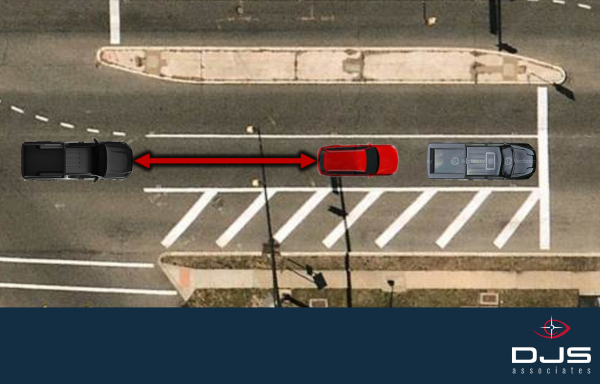
Plaintiff approached an intersection in a silver pickup truck, slowed, and came to a complete stop. It was then rear-ended by Defendant in a black pickup truck. Defendant insisted that the crash was caused by a third, “phantom” vehicle. According to Defendant’s testimony:
- He was approaching the red light normally
- A red sedan traveling directly in front of him suddenly changed lanes
- When the sedan exited his lane, it revealed the stopped silver pickup
- Due to the sudden nature of the pickup “appearing” after the sedan no longer obstructed his view, he did not have enough time to stop
At face value, this explanation attempts to shift liability to an uninvolved, unknown vehicle. But physics tells a different story.
One of the fundamental questions asked in a reconstruction is whether a hazard was visible for sufficient time and distance in order for a reasonably prudent operator to avoid striking it. In this case, analysis was completed to establish whether the alleged lane-changing sedan had any impact on Defendant’s ability to avoid the collision.
Stopping distance is the total distance required for a driver traveling at some speed to perceive and react to a hazard (i.e., move their foot to the brake pedal), in addition to the distance required for the vehicle to decelerate to a stop once the brakes are applied. The faster a vehicle is traveling, the longer the stopping distance. The more time a driver requires to perceive and react (or the less attentive they are), the longer the stopping distance.
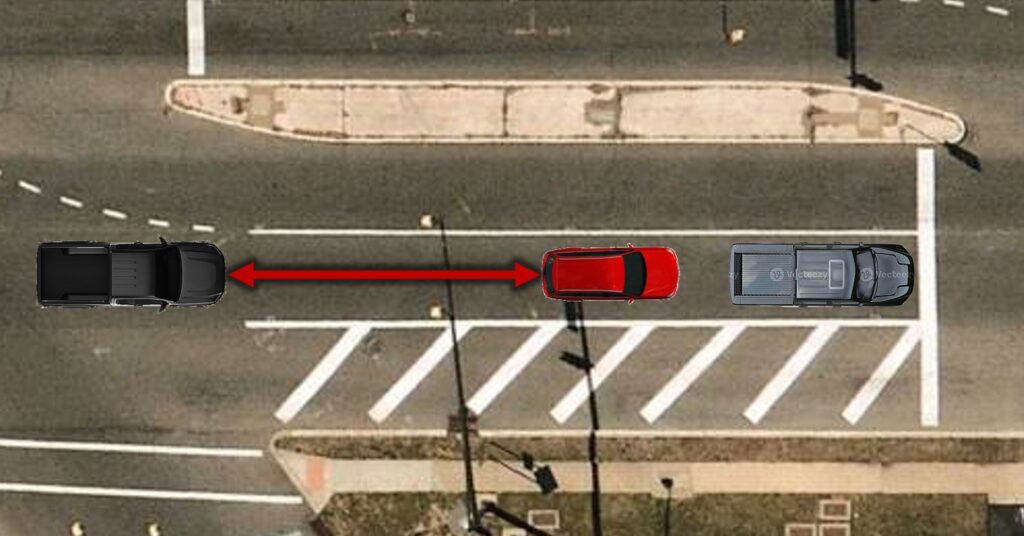
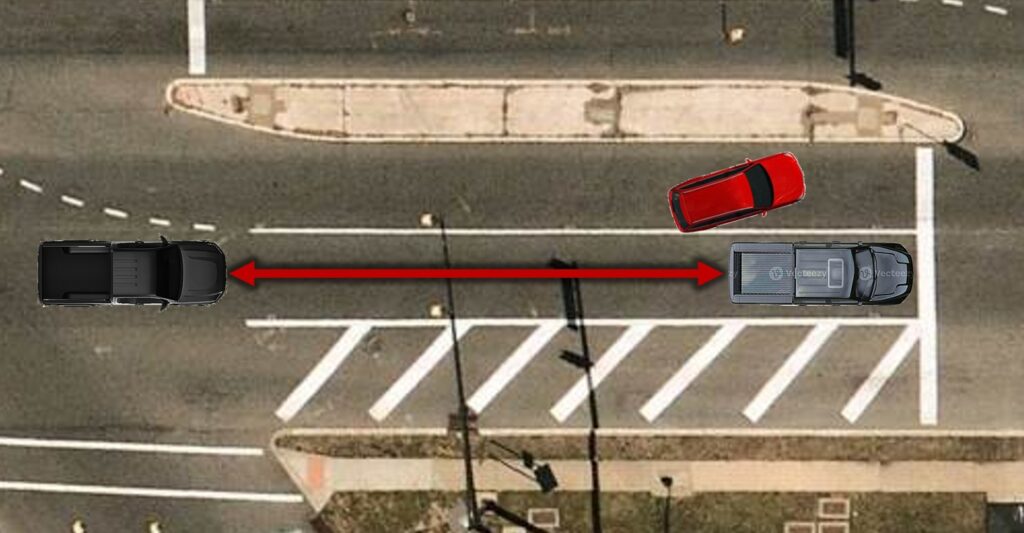
Before the sedan changed lanes, the total stopping distance available to Defendant extended from the front of his pickup truck to the rear of the sedan (see Figure A above). Defendant claimed that after the sedan suddenly changed lanes, it revealed the stopped pickup truck ahead and left him without enough time to stop; however, simple geometry illustrates a critical flaw in that explanation. When the sedan moved out of the lane, it increased the stopping distance available to the Defendant, which now extended from the front of Defendant’s vehicle to the rear of Plaintiff’s vehicle (see Figure B above). In other words, the “phantom” vehicle’s lane change increased the available stopping distance by more than a car length, making the collision easier to avoid from the Defendant’s perspective.
Ultimately, eyewitness testimony can become a liability when individuals attempt to reshape the physics of a collision or introduce external factors (such as a “phantom” vehicle) to deflect responsibility. Under technical scrutiny, inconsistencies with time, distance, and basic kinematics quickly emerge and, in many cases, this only highlights the underlying inattentiveness or decision-making that led to the crash. When testimony departs from the laws of physics, it often strengthens the opposing case rather than weakening it.
Bailey A. Hentz, BSAE, ACTAR
Collision Reconstruction Engineer
View all articles by Bailey A. Hentz, BSAE, ACTAR