“Ditch” the Bad Landscaping
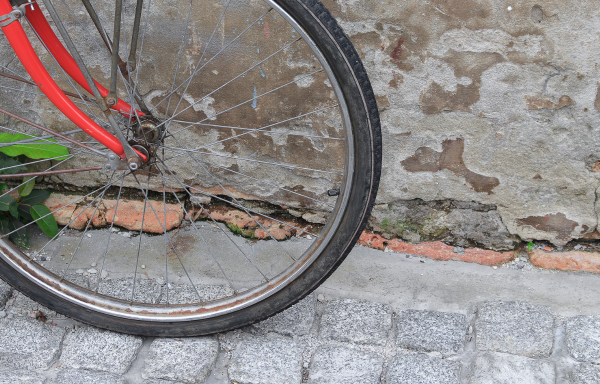
Case Summary: Plaintiff was riding his bicycle on a public street in Mercer County, New Jersey one morning, when he happened upon an acquaintance who appeared to be having vehicle trouble. Plaintiff cycled off the roadway and rode his bicycle onto the public sidewalk, where he stopped to offer assistance.
Plaintiff chatted with his acquaintance for several minutes before mounting his bicycle to continue his journey. As he proceeded along the sidewalk, the front tire of his bicycle went off the edge and got caught in a four- to five-inch-wide by two- to three-inch-deep ditch cut into the tree lawn between the sidewalk and curb.
As he attempted to regain control of his bicycle and ride out of the ditch, the front tire caught the edge of the sidewalk, causing it to jerk violently and throw Plaintiff into the street, injuring his right shoulder, elbow, and knee.
Expert Analysis: Based on the expert’s review of photographs provided by counsel, as well as review of codes, references, interrogatory responses, and deposition testimonies, the following conditions were a direct and proximate cause of Plaintiff’s fall and injury:
- The ditch was more than wide enough to accommodate an adult foot and was lower than the adjacent sidewalk and lawn.
- Plaintiff described the excavation as several inches lower than the surrounding area (both sidewalk and lawn) forming a “four- to five-inch-wide by two- to three-inch-deep ditch.”
- Defendant acknowledged responsibility for the non-standard excavation and maintenance practices.
Plaintiff’s expert determined that such wide and deep “ditches” were not an accepted maintenance practice in the landscape industry. Plaintiff’s expert further determined that, by excavating grass and soil so wide and deep adjacent to the sidewalk, Defendant created a non-standard and hazardous condition that could cause a sidewalk user to fall and sustain injuries. The expert concluded Defendant’s actions were negligent and were a proximate cause of the Plaintiff’s injuries.
The Township did not have regulations governing non-standard conditions in the public right-of-way, although, the code enforcement officer stated that lawn edges next to sidewalks should not be dug out in such a way as to create hazardous conditions. State maintenance regulations require property owners to maintain safe environments in public areas, including sidewalks. Additionally, Federal Highway Department regulations govern conditions within rights-of-way and state that vertical surface discontinuities may not exceed half an inch.