All Bolts Are Not Equal
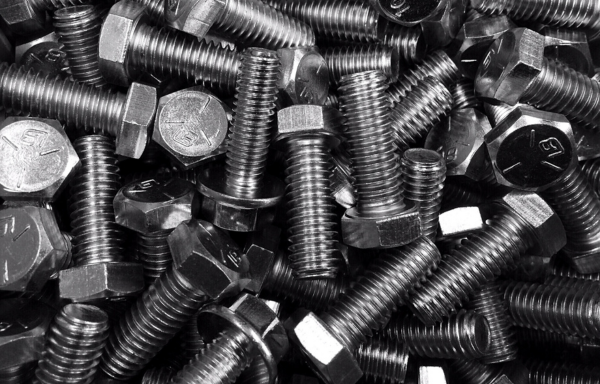
In a 2026 episode of Chicago Fire, a portion of the second floor of a building collapsed while the emergency response crews were attacking an interior fire. Afterwards, it was determined that the collapse occurred when a support column separated from its base, removing support for the upper structure. The separation occurred because the bolts attaching the beam base to the floor failed. A closer look at the failed bolts revealed that despite being the right size, they were not the proper type and did not have the required strength.
After this episode aired, some people asked me, “what could be so different about the bolts?” In short, there are many differences, but primarily it is the bolt’s strength.
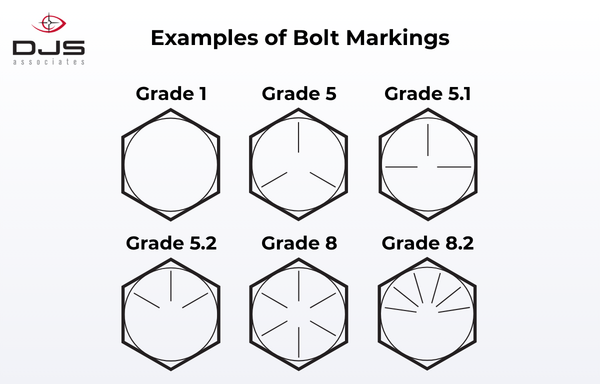
The strength of a bolt is related to the “Grade” of the bolt (or “Class,” if it is a metric bolt). While there are several bolt standards, SAE International and ASTM International standards are the most common. With non-metric bolts and SAE Grades, strengths range from Grade 1 to Grade 8. The difference in strength is related to the type of steel used and heat treatment applied. For example, a Grade 2, ½-inch bolt with coarse threads is rated for a maximum tensile force (pulling load) of 7,800 pounds, but the same size bolt in Grade 8 is rated for 20,600 pounds. The grade can be identified by the number and arrangement of markings on the head of the bolt.
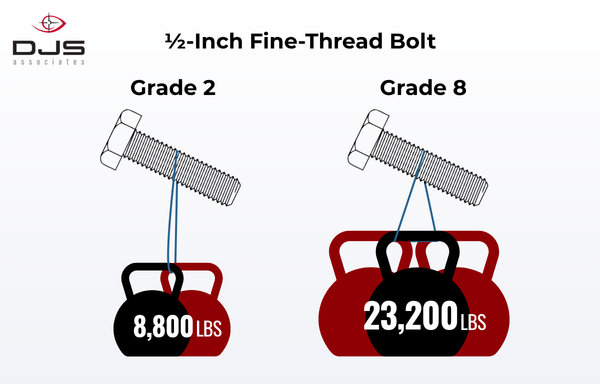
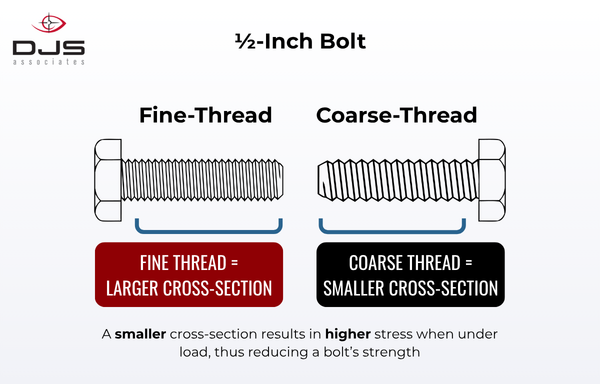
If the bolt in the above example had fine threads instead of course threads, its rated strength would be higher. A fine-thread ½-inch bolt is rated at 8,800 pounds for Grade 2 and 23,200 pounds for Grade 8. This is because the cross-section of the course-thread bolt is smaller, due to the threads being cut deeper. This smaller cross-section results in higher stress compared to the bolt with fine threads under the same load.
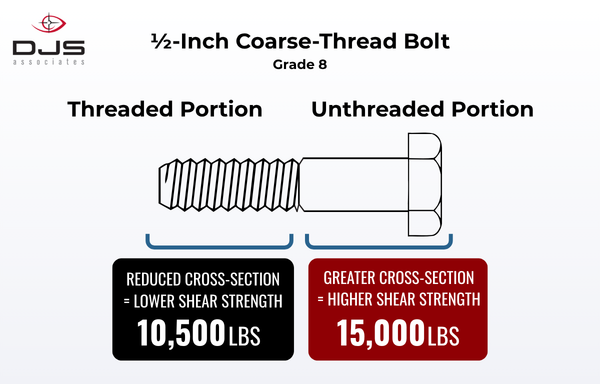
While the discussion above refers to the tensile force (pulling load) on a bolt, higher-grade bolts also have higher shear strength, or in other words, strength against a force trying to cut across the bolt. Fine-thread bolts also have a higher shear strength than coarse-thread bolts. In some cases, even greater shear strength can be achieved with a shoulder bolt (a bolt that is only partially threaded). If the items being bolted together meet on the unthreaded section of the bolt, the cross-section of the bolt is larger, resulting in a higher shear strength. Sticking with our ½ inch coarse-thread bolt example, the shear strength of a Grade 2 bolt across the threads is about 6,500 pounds, but that increases to approximately 9,000 pounds on the unthreaded portion. For the same bolt in Grade 8, the shear strength at the threads is about 10,500 pounds, but approximately 15,000 pounds on the unthreaded portion.
There are numerous other factors that need to be considered when looking at a bolted joint, but the important lesson from Chicago Fire is that the process is not as simple as just getting a bolt that fits in the hole. Proper design, specification, and selection of fasteners can be the difference between a connection that lasts and a premature failure that puts people at risk.
John R. Yannaccone, P.E.
Principal Mechanical Engineer
View all articles by John R. Yannaccone, P.E.