Reconstructing a Complex Officer-Involved Shooting Through Forensic Animation
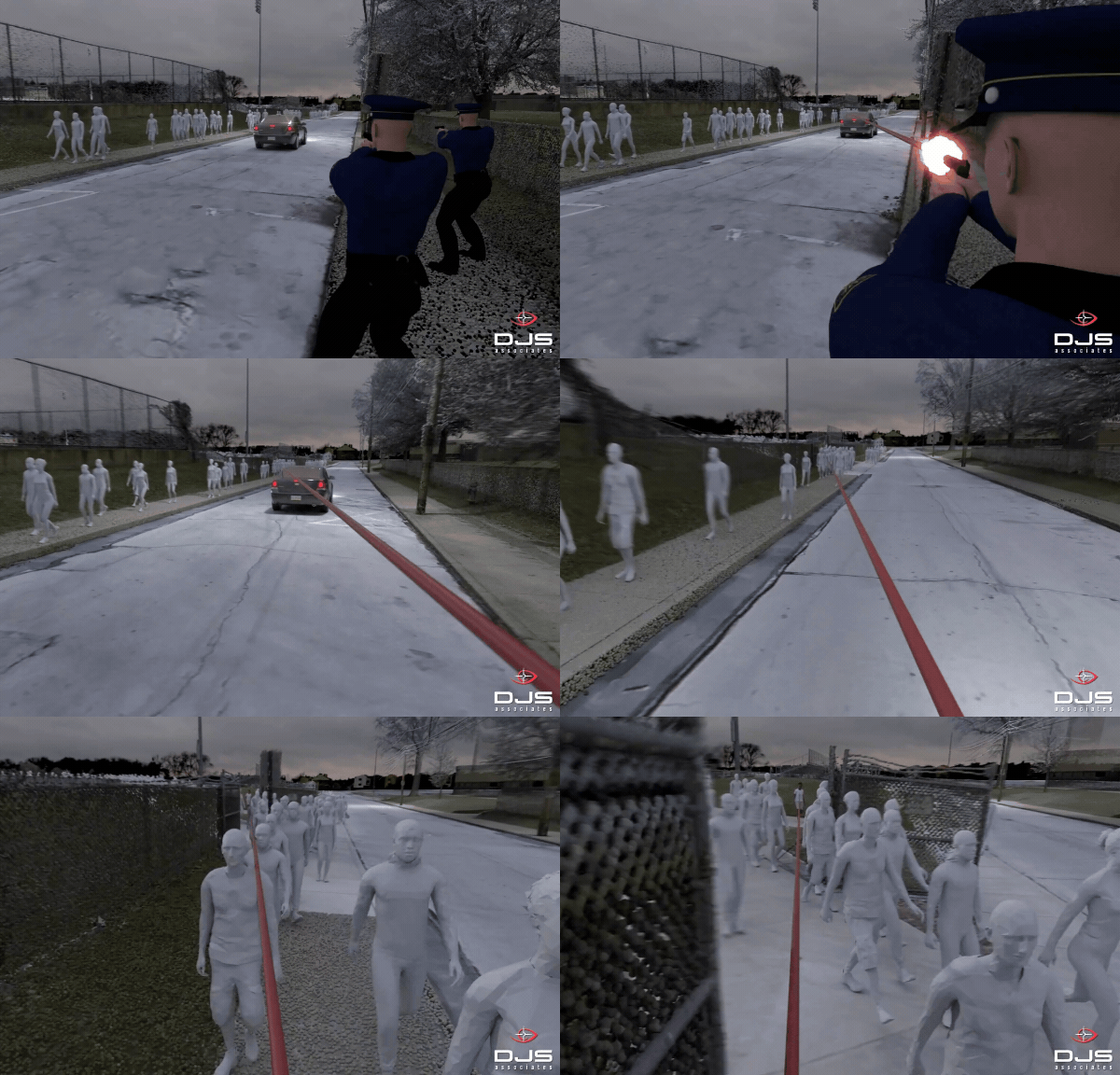
Full animation featured below.
Case Summary: Gunfire erupted as spectators were leaving the stadium following a high school football game. Responding officers across the street believed an approaching vehicle was the source of the shots and opened fire as it passed their position.
The officers fired a total of 25 rounds toward the moving vehicle. One of the bullets missed the vehicle, traveled into the crowd of pedestrians, and tragically struck a bystander.
DJS Associates, Inc. was retained to transform the available witness accounts and physical evidence into a clear, understandable sequence of events through forensic animation. The goal was to allow viewers to see how the incident unfolded in real time, including the officers’ initial response to the sound of gunfire, the movement of the vehicle, the positioning of nearby pedestrians, and the trajectory of the fatal shot.
Expert Analysis: The DJS forensic animation team was challenged to go beyond a traditional reconstruction, which typically incorporates moving vehicles and pedestrians. To accurately communicate the intensity and complexity of the scene, the animation also incorporated crowd movement, representative gunfire and crowd audio, officer tracking, recoil movements, and muzzle flashes from the shots fired.
To create a highly realistic crowd, significant experimentation was required. Using tyFlow, a physics simulation software, the team developed a simulation of varied pedestrian models, with unique walking paths, speeds, and group sizes. The number of animated individuals and the complexity of their movements also demanded substantial computing power.
Animating the officers presented another challenge. Individually creating the aiming, tracking, firing, and recoil movements for all 25 shots would have been extremely time intensive. Instead, the team developed a layered animation system. One layer controlled each officer’s rotational movement as they tracked the passing vehicle, while a second layer controlled the repeated firing and recoil motions.
Each gunshot also required a synchronized visual muzzle flash. Bright, gaseous flashes were created and then duplicated along the timeline to correspond with the timing of all 25 shots. Representative gunfire and crowd sounds were sourced from publicly available recordings and carefully synchronized with the visual reconstruction.
Result: The completed animation brought together the available witness testimony, scene geometry, vehicle movement, officer positioning, pedestrian activity, and timing of the gunfire into one cohesive visual timeline.
Viewers could clearly observe how the officers reacted to the perceived direction of the initial shots, fired toward the passing vehicle with spectators positioned in the background, and how a bullet traveled beyond the vehicle and into the crowd where the decedent was struck.
By translating a complicated and rapidly unfolding event into an understandable visual sequence, the animation helped viewers evaluate the incident with greater clarity, context, and perspective.
Watch more animations from DJS Associates, Inc. on YouTube.